
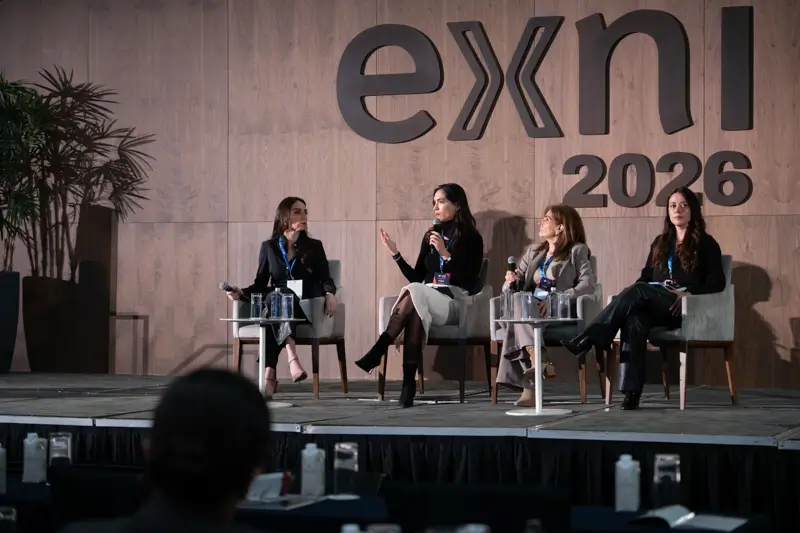
Mexico City, November 2026. — On Thursday, November 12, Rosalba Rojas, Comms and ESG Director at FIBRA SOMA, participated in the panel “ESG in Action: From Strategy to Real Estate Value”, as part of EXNI 2026. The meeting also brought together Josefina Moisés, CEO of AMEFIBRA; Mary Carmen Hernández, ESG director of FibraShop; and Carolina Campos, Sustainability Director of Grupo AXO.
The conversation started from a shared premise: ESG criteria have gone from being only a corporate commitment to becoming a strategic component of the operation and value generation of real estate assets.
In addressing how to bring strategy into operation, Rosalba shared some of FIBRA SOMA’s breakthroughs in integrating ESG criteria into FIBRA portfolio management, supported by measurable results.
In terms of energy, during 2025 3,717 solar panels were installed at Antea in Querétaro, which generated 1,989 MWh of renewable energy. As for water management, the FIBRA portfolio treated more than 400 thousand m3 of water in its treatment plants and reused on site about 40% of that volume, contributing to cover almost a quarter of the water consumption of the assets with own resources. In water-stressed areas, these actions reduce supply dependence on pipes and strengthen operational resilience. In addition, about 56 thousand m3 of treated water were donated for the irrigation of public areas, helping to preserve the resource for neighboring communities.
On the relationship between ESG indicators and value for investors, Rosalba highlighted the increase in expectations and requirements of domestic and international investors. Given this situation, FIBRA SOMA is promoting investments in climate change adaptation and asset resilience studies, with particular attention to those indicators that allow us to link ESG performance to financial performance, such as energy efficiency, water resilience and waste management.
The panel concluded with a reflection on the importance of collaboration between FIBRAs, tenants and commercial operators, as well as having transparent and comparable reports. These elements are key to translating sustainability commitments into concrete results and tangible value for real estate assets.
We thank the organizers of EXNI 2026 and the invited panelists for facilitating this space for dialogue and exchange of experiences.
